Understanding the Cost of Mold Removal in Your Attic: A Canadian Homeowner's Guide

Figuring out the cost for professional attic mold removal can feel like a shot in the dark, but it generally falls between $500 for a small, isolated patch and can go over $7,000 if the contamination is widespread and has ruined your insulation. For most Canadian homeowners, a complete remediation project usually lands somewhere between $2,000 and $4,500. These figures aren't just arbitrary; they reflect the detailed, multi-step process required to safely and effectively eliminate mold and address its underlying cause.
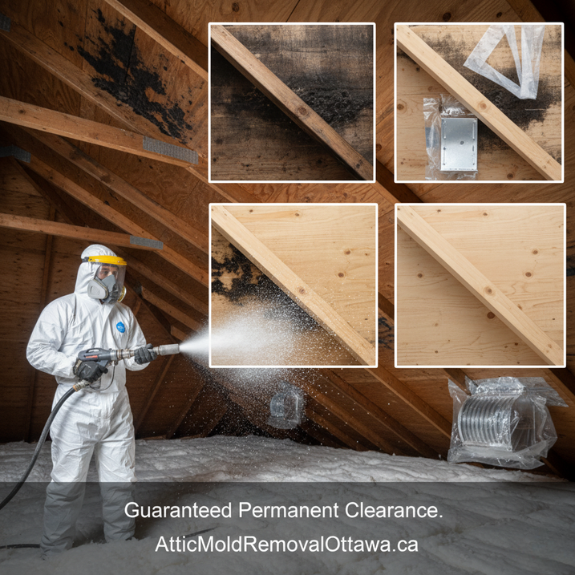
Finding mold in your attic is a stressful moment for any homeowner, often accompanied by concerns about both health and finances. Getting a handle on the potential costs is the first practical step toward solving the problem for good. The price ranges you see reflect the meticulous, careful work needed to make your home a safe environment again. This is not a simple cleaning job; it is a professional service involving containment, specialized equipment, and certified expertise.
Think of it this way: patching a small hole in the drywall is a quick fix, but renovating an entire room is a much bigger investment requiring planning, proper materials, and skilled labor. It's the same with mold. A tiny, contained spot of surface mold is one thing, but widespread growth that has penetrated wood sheathing and insulation requires a full-scale response. This includes setting up containment zones, using negative air machines, and sometimes, replacing structural materials. This is exactly why a professional, on-site assessment from a certified team like Attic Mold Removal Ottawa is so important.
Estimated Cost Breakdown
To give you a clearer idea of what to expect, we've put together a table summarizing the typical costs based on the severity and scale of the mold problem. Just remember, these are ballpark figures. An accurate, firm quote for your specific situation can only be determined after a detailed inspection by a professional who can assess all contributing factors.
Estimated Attic Mold Removal Costs in Canada (CAD)
This table breaks down the typical cost ranges for professional attic mold remediation, giving you a better sense of the investment based on the scope of the problem.
Severity LevelCost Per Square Foot (Approx.)Typical Total Project Cost (Approx.)Small/Localized (Under 10 sq. ft.)$20 - $30$500 - $1,500Moderate (10 - 100 sq. ft.)$15 - $25$1,500 - $4,000Extensive/Severe (Over 100 sq. ft. or with structural damage)$10 - $20+ (plus replacement costs)$4,000 - $7,000+
These numbers generally cover the labor, containment, and materials for the mold removal process itself. Other crucial variables, such as how easily accessible your attic is, whether insulation needs to be removed and replaced, and the complexity of fixing the original moisture source, will all play a significant part in the final cost.
A professional inspection is absolutely non-negotiable if you want an accurate quote. An expert can spot hidden mold, determine the full extent of the damage, and—most importantly—pinpoint the root cause so the problem doesn't just come right back. This initial assessment is the foundation of a successful remediation plan.
At Simon Air Quality, we believe in being completely transparent with our clients. Our certified technicians meticulously evaluate every single factor to provide you with a clear, detailed, upfront quote with no hidden surprises. An informed homeowner is an empowered one, and that starts with having realistic cost expectations from a trusted source. After remediation, maintaining clean air is the next step. We often recommend a powerful unit like the Amaircare 3000 air purifier to capture any lingering airborne particles and ensure your home's long-term health.
What Really Drives Your Final Remediation Bill
Ever looked at a quote for attic mold removal and wondered about the final number? It's a common question. Why does one job come in at $2,000 while a similar-looking attic gets a quote for $5,000? The answer is almost never just about the visible square footage of mold. The final price is a detailed calculation based on multiple, interconnected factors.
Think of it like a mechanic's quote for a car repair. The initial problem might seem simple, like a check engine light, but what's discovered during a deep diagnostic dive can change the scope of the work entirely. Several key variables shape your final bill, which is why a detailed, professional assessment is so crucial. At Simon Air Quality, our experts don't just peek at the visible mold; we investigate the entire attic ecosystem to give you a transparent, accurate quote that tackles the problem at its source.
The Scope and Severity of Mold Growth
The most obvious cost driver is, of course, how much mold there is and how deeply it has penetrated the materials. A small, contained patch of surface mold on a single roof joist is a relatively straightforward fix. However, if that mold has worked its way deep into porous materials like your wood sheathing or has spread across a massive area, the labor, specialized equipment, and materials needed to remove it jump significantly.
The type of mold can also play a role. While most common molds are handled with similar professional-grade antimicrobial agents, certain types like Stachybotrys (often called "black mold") may call for stricter containment and disposal protocols due to the potent mycotoxins they can produce. This adds extra layers of safety precautions and complexity to the job, which naturally affects the overall cost. Our team is trained to identify and handle all types of mold safely.
Accessibility and Structural Complexity
You might be surprised by how much your attic's layout can influence the price. An attic with a proper staircase, high ceilings, and plenty of open space is a much simpler and safer environment for technicians to work in. Conversely, a cramped space accessible only through a tiny scuttle hole presents numerous challenges that increase the time and effort required.
Here are a few common challenges that add to the timeline and cost:
Low Clearance: When technicians have to crawl on their hands and knees or work in awkward, contorted positions, every task takes longer and is more physically demanding.
Tight Spaces: Getting into hard-to-reach corners, eaves, and behind structural supports takes more time and specialized equipment to clean properly and ensure no mold is left behind.
Obstructions: HVAC ductwork, complex wiring, plumbing stacks, or stored belongings can make it tough to set up containment barriers and move around efficiently, adding hours to the job.
These physical hurdles have a direct impact on the labor hours required to do the job safely and completely, which is a major component of your final invoice.
Insulation and Material Replacement
Mold doesn't just grow on wood—it absolutely thrives in the fibrous, porous environment of attic insulation. If mold has found a home in your insulation, that material is considered contaminated and almost always has to be removed and replaced. This isn't just one step; it's a multi-stage process that adds a significant amount to the project's total cost.
The job suddenly expands to include these critical phases:
Safe Removal: Contaminated insulation must be carefully bagged in thick, sealed disposal bags inside the contained attic space and removed without letting spores escape into the rest of your house.
Surface Remediation: Once the insulation is gone, the surfaces underneath (like the ceiling drywall or wood joists) still need to be thoroughly cleaned and treated for any remaining mold growth.
New Insulation Installation: Finally, new, clean insulation has to be professionally installed to restore your home's energy efficiency and thermal barrier.
This is a huge reason why attic mold jobs can have such drastically different price tags. For instance, a basic attic mold remediation project might run from $1,500 to $6,000. But when you have to factor in extensive mold and a full insulation replacement, that number can easily climb to $6,000 to $15,000. It’s clear that replacing materials is a game-changer in the final cost. Understanding the principles of labor, disposal, and material replacement is key for many home projects, including the cost to remove other home features. And before any work starts, it's smart to know what you're up against; check out this guide on the costs of mold testing to see why getting a professional diagnosis first is a worthwhile investment.
What a Professional Mold Remediation Actually Looks Like
Seeing a team of technicians show up in full personal protective equipment (PPE) can look pretty intense, but it’s a non-negotiable part of doing the job safely and correctly. This isn’t just about cleaning a stain; it's a meticulous, step-by-step operation designed to completely remove the mold, eliminate airborne spores, and ensure it doesn’t come back. At Simon Air Quality, we follow a strict, industry-certified protocol to get your attic back to a healthy state, protecting both your family and your home's structure.
Knowing what happens during remediation can demystify the process and highlight why calling in a professional is so critical for a real mold problem. Every single step is carefully planned to contain the issue and eradicate it at its source, preventing cross-contamination and future growth.
This infographic breaks down three of the main things that affect how complex—and costly—an attic mold removal project can be.

As you can see, the size of the mold problem, how tough it is to get into the space, and any damage to the structure all play a huge role in the scope of the work.
Step 1: Initial Assessment and Containment Setup
The very first move is always a detailed assessment. A certified technician from Simon Air Quality will thoroughly inspect your attic to determine the exact extent of the mold growth, pinpoint the moisture source that is feeding it, and develop a precise, written remediation plan. Think of it as the diagnostic phase that sets the stage for a successful treatment.
Once we have a plan, the most critical part begins: containment. We use heavy-duty plastic sheeting and negative air pressure machines (air scrubbers) to completely seal off your attic from the rest of the house. This creates a pressurized "bubble," ensuring that any disturbed mold spores are captured by HEPA filters and cannot hitch a ride through your HVAC system or doorways to cause trouble elsewhere in your home.
Setting up proper containment is the definitive line in the sand between professional and amateur work. It is the number one defense against cross-contamination and a key reason why DIY mould removal often backfires, accidentally spreading the problem and making it much worse.
Step 2: Physical Removal and Disinfection
With the area safely contained, our highly trained team gets down to the physical work of removing the mould. This is far more than a simple wipe-down with a household cleaner. For hard, non-porous surfaces, we’ll use powerful, eco-friendly antimicrobial agents. For porous materials like wood studs and sheathing, we must get more aggressive with techniques like soda blasting, wire brushing, or sanding to physically strip the mold growth and its roots from the material itself.
Any materials that are too contaminated to be salvaged, like soaked insulation or moldy drywall, are carefully cut out and removed. We seal these items in special 6-mil thick disposal bags before they ever leave the contained area to ensure spores aren't released into your home during transport. This step can be a big part of the overall mold removal cost in an attic, as it involves both labor and the cost of replacing materials. Our team is fully trained in this entire process, and you can learn more about our comprehensive attic mold removal services here.
Step 3: Final Cleaning and Post-Remediation Verification
After every trace of visible mold and contaminated material is gone, the entire attic gets a final, deep clean. We go over every single surface with HEPA (High-Efficiency Particulate Air) vacuums to suck up any microscopic spores that might be lingering on surfaces or in the air. This is often followed by applying an antimicrobial disinfectant or an encapsulant paint, which acts as a final protective barrier to prevent future mold growth on the treated surfaces.
Finally, we conduct a post-remediation verification. This involves a thorough visual inspection to ensure all work meets industry standards. In some cases, third-party air quality testing may be recommended to provide scientific confirmation that the mold spore count in your attic has returned to a normal, safe level. This last step provides you with total peace of mind, knowing your attic is officially clean and your home's air is healthy again.
DIY vs Professional Cleanup for Attic Mold
When you discover mold in the attic, your first thought might be to grab a bottle of bleach and a scrub brush to tackle it yourself. It’s a tempting idea—who doesn’t want to save money on home repairs? But when it comes to attic mold, going the DIY route is a significant gamble, one that is loaded with hidden health and financial risks that can cost you a whole lot more in the long run.
Sure, for a tiny, isolated spot of surface mold—perhaps something smaller than 10 square feet—you might feel you can handle it. The critical problem is that what you are seeing is often just the tip of the iceberg. The real danger lies in the millions of microscopic spores you can't see, which are just waiting to be disturbed by scrubbing and spread throughout your entire home's air system, creating new colonies in other areas.
The Hidden Dangers of a DIY Approach
Trying to clean up attic mold yourself without proper training or equipment is like attempting to perform electrical work without being a licensed electrician. You might fix the flickering light, but you could accidentally create a serious fire hazard. Without professional containment, negative air machines, and commercial-grade air filtration equipment, you are highly likely to turn a contained attic problem into a full-blown house contamination crisis.
Here’s a detailed look at what you’re up against:
Cross-Contamination: The moment you start scrubbing, you release a cloud of countless spores into the air. Without negative air pressure machines and properly sealed containment zones, those spores will hitch a ride on air currents, travel through your HVAC system, and find new damp places to start growing, like in your walls or basement.
Health Exposure: That paper dust mask from the hardware store is completely inadequate for protecting you from mold. Professionals at Simon Air Quality use full-face respirators with P100 cartridges and other Personal Protective Equipment (PPE) for a reason. Inhaling mold spores and their toxic byproducts (mycotoxins) can trigger severe respiratory problems, allergic reactions, headaches, and other serious health issues for you and your family.
Incomplete Removal: Bleach is effective at removing the colour of mold, making it look like the problem is solved. However, it rarely kills the hyphae (the roots) that have dug deep into porous materials like wood joists and sheathing. Within weeks or months, the mold will reappear in the same spot.
Ignoring the Source: This is the biggest failure of almost every DIY attempt. You can scrub all day, but if you don't permanently fix the underlying moisture problem—whether it's a leaky roof, poor ventilation, condensation from bathroom fans, or an ice dam—the mold is absolutely guaranteed to return.
Tackling attic mold without proper training is a significant gamble with your family's health and your home's structural integrity. A failed DIY attempt can lead to a much larger, more expensive professional remediation project down the line, turning a $3,000 problem into a $10,000 one.
The Value of Professional Expertise
Bringing in a certified professional from Simon Air Quality isn't just about cleaning up a mess; it's an investment in getting the job done right, safely, and permanently. Our technicians follow a systematic, documented process to ensure the mold is completely eliminated and won't come back. We have the specialized gear—like industrial HEPA vacuums, commercial air scrubbers, and safe antimicrobial agents—and the certified expertise to handle the situation effectively.
Professional work has a clear financial scope. Across different regions, you'll see contractors charging anywhere from $3.00 to $6.00 per square foot for attic mold remediation. That price tag covers the skilled labor, specialized equipment, liability insurance, and safety protocols needed to do the job thoroughly. You can learn more about regional mold removal costs and their determining factors. It’s an investment in a comprehensive, guaranteed service that a DIY job simply can't match.
When you choose a professional service like Simon Air Quality, you get:
A Thorough Assessment: We don’t just look at the visible mold. We use moisture meters and thermal imaging cameras to find the full extent of the problem and, most importantly, pinpoint the exact moisture source that’s feeding it.
Proper Containment: We completely seal off the attic from your living space. This crucial step prevents spores from escaping and contaminating the rest of your home while we work.
Safe and Effective Removal: Using industry-approved techniques and powerful, professional-grade antimicrobial agents, we eliminate mold from every affected surface.
Guaranteed Results: We stand by our work, providing you with the peace of mind that your home is safe, healthy, and mold-free.
Once the remediation is complete, keeping the air clean is key. We often recommend installing an Amaircare 3000 air purifier to capture any lingering airborne particles and keep your indoor air quality pristine. A healthy home is about more than just mold, which is why we also offer vital services like radon services to tackle other invisible threats to your family's health.
How to Prevent Mold from Coming Back

Successfully removing mold from your attic is a huge relief, but let's be honest—the job isn’t truly finished until you’ve taken concrete steps to ensure it can't come back. Preventing mold’s return is the real victory here. It transforms your remediation cost from a one-time, reactive expense into a lasting investment in your home's health and value.
The strategy for prevention is actually quite straightforward: you have to aggressively eliminate the conditions that allowed the mold to grow in the first place. Mold needs three things to thrive: a food source (like wood or drywall), a suitable temperature, and moisture. You can't remove the food source, but you can control the moisture.
This means getting proactive and focusing on three core areas. You need to control moisture at its source, ensure your attic can breathe properly with good ventilation, and maintain your insulation so it doesn't become a damp, welcoming environment for mold. Get these right, and you shift from reacting to a recurring problem to actively protecting your home for the long haul.
Control Moisture at the Source
Mold needs water to survive. Period. The single most effective thing you can do is hunt down and eliminate every potential source of moisture in and around your attic. Even a tiny, slow drip from a faulty roof flashing can create the perfect damp, humid environment for mold spores to latch onto your roof sheathing and joists.
Here’s a practical checklist of actionable steps to get you started:
Roof and Flashing Inspection: At least twice a year, check your roof for damaged or missing shingles, cracked flashing around vents, skylights, and chimneys, or any other signs of water intrusion. A small leak can go unnoticed for months while quietly feeding a serious mold problem inside your attic.
Exhaust Vent Rerouting: This is a big one. Make absolutely sure all exhaust fans—from bathrooms, the kitchen, and your clothes dryer—vent directly outside through the roof or a side wall. Pumping warm, moist air into a cool attic is a guaranteed recipe for condensation and widespread mold. Never allow vents to terminate inside the attic space.
Plumbing Checks: If any plumbing pipes run through your attic space, inspect them periodically for signs of condensation ("sweating") or slow leaks. Insulating these pipes can help prevent this issue.
Enhance Your Attic Ventilation
A stuffy, stagnant attic is a mold paradise. Proper ventilation creates a constant flow of air that pushes moist, warm air out and pulls fresh, dry air in, keeping the entire space from getting clammy and humid. Without this crucial airflow, humidity from your living space builds up, condenses on the cool wood surfaces of the roof deck, and creates the ideal breeding ground for mold.
A crucial step is ensuring you have effective attic ventilation. A well-designed system usually involves a balanced intake and exhaust setup. Soffit vents under the eaves pull cool, dry air in, while ridge or gable vents at the peak of the roof allow hot, humid air to escape through natural convection. The goal is to have a continuous, gentle wash of air through the space.
A common and costly mistake homeowners make is blocking soffit vents with insulation. This effectively suffocates your attic, trapping moisture and undoing all your hard work. Always ensure your vents are clear and unobstructed to allow for proper airflow.
Maintain Healthy Air Quality Post-Remediation
Even after a thorough, professional remediation, some microscopic mold spores can remain airborne throughout your home. Capturing these lingering particles is the final, crucial step to locking in a healthy indoor environment for your family. A high-quality air purifier acts like a 24/7 security guard, continuously filtering out spores, dust, dander, and other allergens before they can settle and cause new problems.
For homeowners who are serious about keeping their indoor air pristine, we consistently recommend the Amaircare 3000 air purifier. Its powerful, medical-grade HEPA filtration system is specifically designed to capture 99.97% of airborne particles as small as 0.3 microns, including mold spores, ensuring the air your family breathes is as clean and safe as possible. Partnering with Simon Air Quality means you get a complete solution—from expert mold removal and radon services to long-term strategies for maintaining a healthy home.
Securing Your Home with Simon Air Quality
Discovering mold in your attic is a stressful experience, and choosing the right team to handle it is a significant decision that impacts your family's health and your home's value. At Simon Air Quality, we're not just a service provider; we are your dedicated partner in restoring your home to a safe, healthy state. We bring certified expertise, an unwavering commitment to safety, and a completely transparent process to every single job. Our goal is simple: to protect your home and your family, starting from the very first phone call.
A healthy home is much like a living organism—every system is interconnected. The air quality in your attic doesn't just stay in the attic; it inevitably circulates and affects the air you breathe throughout your entire house. Poor air quality upstairs can be a symptom of deeper issues, much like radon gas seeping up from the foundation is an invisible threat from below. We believe in taking a holistic view, addressing potential hazards from the roof right down to the basement to ensure your entire indoor environment is sound and safe.
A Holistic Approach to a Healthy Home
Our expertise extends beyond a single problem because we know from experience that home health issues are rarely isolated. We provide a comprehensive suite of services to protect your home from multiple threats.
Certified Mold Remediation: We don't just spray and wipe. Our process involves identifying and fixing the root cause of the problem, safely removing the mold, and implementing strategies—like correcting moisture and ventilation issues—to ensure it does not return.
Professional Radon Mitigation: We also tackle unseen dangers lurking in your home. Radon is a naturally occurring, radioactive gas that can silently seep into homes from the ground and is the leading cause of lung cancer for non-smokers. Our certified team is equipped to test for and mitigate this serious threat, protecting your family from multiple angles.
Comprehensive Air Quality Solutions: From asbestos abatement and air duct cleaning to upgrading your insulation, all our services are designed to work together synergistically. The end result is the healthiest, safest living space possible for you and your loved ones.
Your Next Steps to a Safer Home
Taking the first step towards a healthier home is easy. When you're ready to tackle your attic concerns, our team at Simon Air Quality is here to provide a thorough, no-obligation consultation and lay out a clear, understandable plan of action. We take immense pride in being a trusted partner for your home's long-term health and safety. You can learn more about our detailed process by exploring our professional mold removal services in Ottawa.
To maintain that clean, fresh air long after our remediation work is done, consider investing in a high-performance air filtration unit. The Amaircare 3000 air purifier is an excellent choice for continuously capturing airborne particles, ensuring the air your family breathes stays healthy and pure for years to come.
Your Attic Mold Questions Answered
When you find mold in your attic, it's natural for a flood of questions and concerns to follow. Getting clear, straightforward answers from a trusted source is the first step toward tackling the problem with confidence and peace of mind. Let's walk through some of the most common questions we hear from homeowners facing this issue.
Will My Home Insurance Cover Attic Mold Removal?
This is the big one, and honestly, the answer is often tricky: it all comes down to the root cause of the moisture. Most standard home insurance policies will only cover mold damage if it’s a direct result of a "covered peril"—a sudden and accidental event, like a burst pipe flooding the ceiling or a tree limb punching a hole in your roof during a major storm.
Where things get complicated is with gradual issues. If the mold grew because of poor attic ventilation, chronic high humidity, a slow, undetected roof leak, or condensation you didn't get around to fixing, your claim will almost certainly be denied. Insurance companies view these situations as preventable maintenance problems, which are typically excluded from coverage. Your best bet is to dig out your policy and read the fine print on mold coverage, and be sure to thoroughly document the source of the water when you file a claim.
How Long Does the Remediation Process Take?
The good news is that most professional attic mold remediation jobs are wrapped up relatively quickly, typically within 1 to 5 days. The exact timeline really just depends on the size and complexity of the problem.
Here's a rough breakdown of what you can expect:
Small, Localized Mold (1 Day): If it's just a small, easily accessible patch of surface mold on the sheathing and no materials need to be torn out, a professional team can often have it fully remediated in a single day.
Moderate Growth (2-3 Days): When the mold covers a larger footprint and requires the removal of contaminated insulation, the job will stretch over a few days. This gives the team adequate time to set up proper containment, perform the removal, clean and treat all surfaces, and conduct final checks.
Extensive Contamination (3-5+ Days): In severe cases involving widespread mold across most of the attic, a full insulation replacement, and possibly some structural repairs (like replacing rotted wood), the process can easily take a week or more to complete correctly.
Is Professional Mold Testing Always Necessary Before Remediation?
You might think testing is a mandatory first step, but it’s not always needed if the problem is obvious. If you can plainly see significant mold growing in your attic, the top priority is to have it removed safely by professionals and to stop the moisture source. In that scenario, paying for a test just to confirm what your eyes are already telling you is often an unnecessary expense.
However, there are a few key situations when professional mold testing is absolutely worth the investment:
Health Concerns: If a family member is dealing with mysterious respiratory issues, allergies, or other chronic health problems, testing can identify the specific mold types and spore concentrations present. This is incredibly valuable information to share with a doctor or allergist.
Real Estate Transactions: A post-remediation "clearance test" performed by an independent third party provides official, unbiased proof that the mold has been successfully removed and the air is safe. This is often a non-negotiable requirement when selling your home.
Legal Disputes: If you're in a conflict with a landlord or battling an insurance claim, certified lab results provide the hard, scientific evidence you need to support your case.
In California, for example, the average cost for remediation projects like these hovers around $2,300, with most homeowners paying somewhere in the range of $1,200 to $3,750.
No matter what questions you have, the team at Simon Air Quality is here with clear answers and expert solutions for both mold remediation and radon services. To keep the air in your home fresh and healthy long after the job is done, we highly recommend the Amaircare 3000 air purifier.
